- HOME
- Neural progenitor cells (SMP-0115)
Spinal cord injury (SCI) is a neurological disorder caused by traumatic or other factors that
disrupt the transmission of motor, sensory, and autonomic signals below the site of injury. Spinal cord injuries
are classified based on their level and completeness, with symptoms varying depending on the location and
severity of the damage, and it can have a major impact on daily life.
Common causes include traffic accidents, falls, and sports-related injuries. In Japan, the number of SCI cases
among elderly has been increasing, particularly due to minor incidents such as falling while standing or
walking. This trend has led to a rise in elderly patients with SCI. Globally, more than 15 million people are
living with spinal cord injuries.
Current Treatments
SCI is generally divided into three distinct stages: acute, subacute, and chronic, depending on the time elapsed
since the injury. In current clinical practice, rehabilitation therapy is actively initiated during the acute
phase to preserve and optimize the remaining neurological functions. These interventions can lead to a certain
degree of recovery, especially when started early and tailored to the individual’s condition. However, a treatment
that can fully restore the damaged spinal cord has not yet been established.
The chronic phase, which accounts for the majority of SCI patients, presents a particularly challenging
environment for regeneration. Biological factors such as scar formation and inhibitory molecules create conditions
that hinder the regeneration of endogenous neuronal networks. As a result, functional recovery through
rehabilitation alone is often limited, especially in terms of restoring lost motor or sensory functions.
Nevertheless, rehabilitation remains essential for maintaining physical health, preventing complications, and
supporting independence. To address these challenges, global research is making steady progress toward new
therapeutic options.
Our Goal with Regenerative
and Cellular Therapy
The spinal cord is primarily composed of three essential cell types:
- Neuron
- Transmits electrical signals throughout the nervous system, enabling communication between the brain and the body.
- Astrocyte
- Supports the neurons by supplying nutrients, regulating neurotransmission, and maintaining the spinal cord’s microenvironment.
- Oligodendrocyte
- Forms the myelin sheath around the axons, allowing faster and more efficient signal conduction.
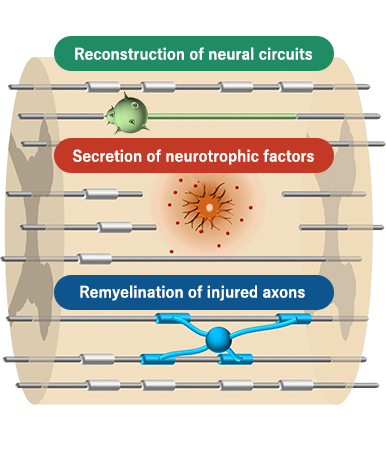
Our research focuses on generating neural progenitor cells from iPS cells, which have the capacity to differentiate into all three of these cell types. By transplanting these cells into the injured spinal cord, we aim to:
- ・ Reconstruct disrupted neural circuits through graft-host synaptic integration
- ・ Support the recovery of neurological function
- ・ Promote remyelination of damaged neurons
We are also exploring the combined effect of this cell-based therapy with rehabilitation, with the goal of enhancing therapeutic outcomes and maximizing functional recovery.